
Built on the Site
“George Washington helped lay the foundation.”
Our oldest daughter Brell was touring the campus of Washington College, which claims to be Maryland’s oldest college (the veracity of the claim depends on the criteria but the college was chartered on May 24, 1782, shortly after America’s founding). Brell’s tour guide was explaining the significance of Middle Hall, which, together with East Hall and West Hall, stand as the oldest surviving buildings on campus. They are built on the site of the original campus building that burned down in 1827. While it is unlikely George Washington physically assisted in laying the original foundation, he did make financial donations that made construction possible and, while many colleges bear the name of America’s first president, Washington College is believed to be the only one to receive his express consent.
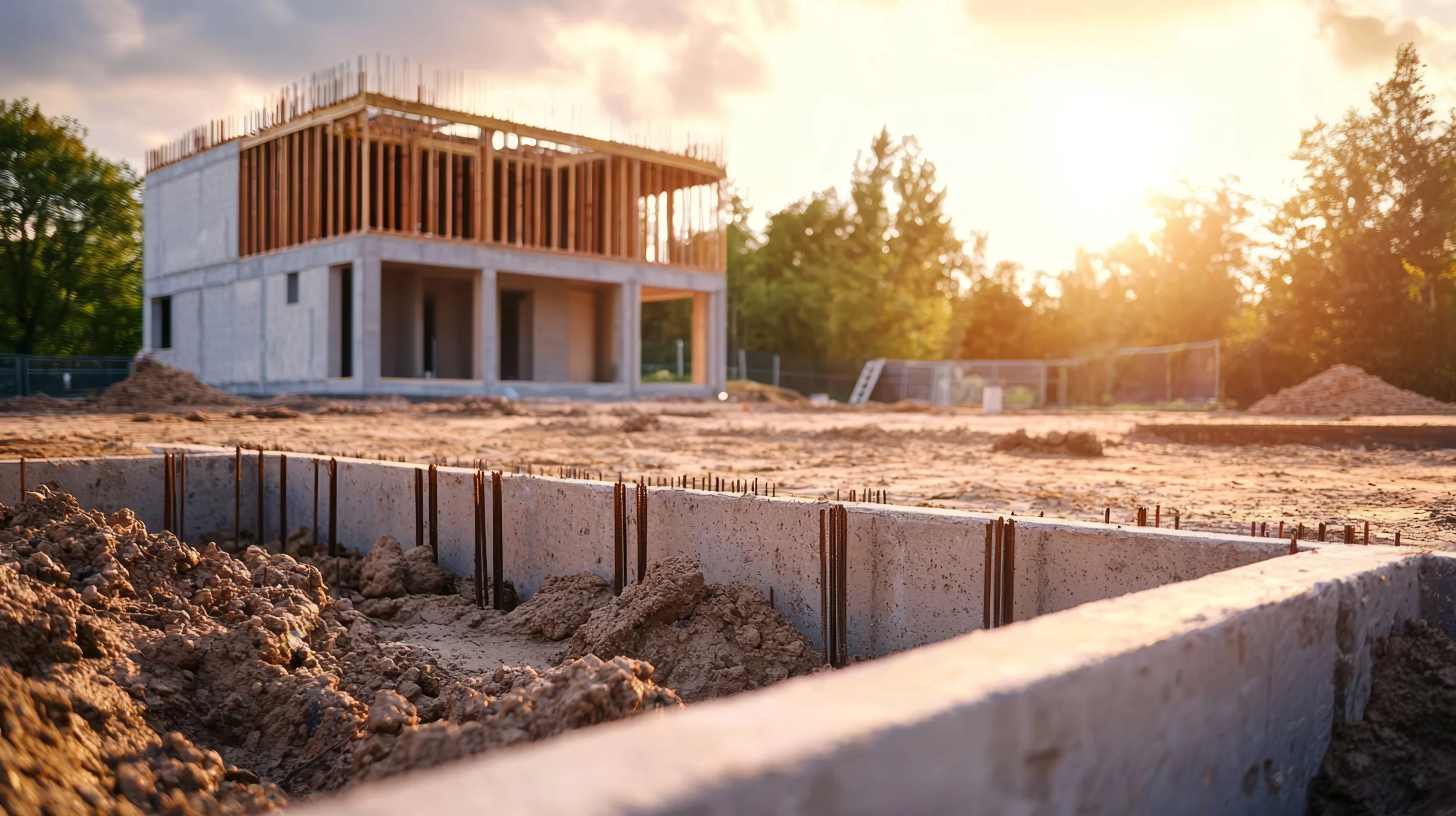
As we toured the newer—and in many respects, nicer—portions of campus, my mind kept returning to Middle Hall and the idea of building on original foundations.
In the physical world, everything that is built has a life cycle. Buildings, vehicles, clothes, laptops, everything. After a certain amount of time, it is simply expected that the item in question will have lived out its useful life (psst . . . please don’t share this truth with my 240,000-mile pickup, as I’m pulling for it to go another 240,000). In fact, this reality is so ingrained that it is incorporated into how businesses claim tax deductions for the purchase of assets that will depreciate over time. For purposes of this discussion, the important thing to note is that all created things have a finite useful life.
However, in many cases, the foundation of those created things remains on after the useful life of the larger item has passed. In some cases, the value is minimal (i.e., clothes can be used as rags after they are no longer wearable while a laptop and a vehicle have some salvage value even after they are no longer viable for their intended purpose). In other cases, the value of the foundation can be significant. For example, when a house burns, it is often possible to rebuild on the existing foundation (assuming the fire was primarily contained to the above-ground structure). In these cases, there can be significant cost and time savings by building on the existing site using the existing foundation.
It is true for people too. Each of us can and should, as Sir Isaac Newton famously put it, “stand on the shoulders of giants” by learning from and building on the foundation laid by those who have gone before us.
Scripture regularly points us to this wisdom, imploring children to heed the instruction of their parents (Pr. 13:1) and encouraging Jesus followers to follow the example of heroes of faith who now stand as a “great cloud of witnesses” to them (Heb. 12:1).
Perhaps you, like me, have been blessed with the foundation of a godly heritage. No family history is perfect or without difficulty and flaw, but the blessing of a godly family foundation is of immense value!
In short, both people and tangible property benefit when it is possible to build on the foundation of an existing site.
This perspective lends new light to Psalm 118:22, “The stone the builders rejected has become the cornerstone.”
Why did the religious world of Jesus’s day reject Him as the cornerstone of their faith? The straightforward answer is that He was insisting on replacing them as the cornerstone. He was asserting it was no longer suitable to build on the foundation they had long established but now mandatory to build on Him instead! It was a radical claim and one that did not go over well or easily!
My friend, the foundation of your life is of critical importance! There is only one foundation that will stand forever, and it is the only one strong enough to support all the enemy will bring against you! Here is the tremendous news: that foundation is freely available to you even if the earthly foundations of your life are in shambles. You need only to build on the site that is the rock of Jesus Christ!
Note: If some of this language is new or confusing to you but you’d like to learn more about having a relationship with Jesus, email thann@theequippednewsletter.com. I’d love to have a conversation with you.
The preceding article originally appeared in Thann’s “The Equipped” Weekly Newsletter. For more information on Thann’s weekly email, click here.