
Can the City of University Heights, Ohio, Prevent Jews from Hosting Prayer Services in Their Home?
Decades ago, Czech dissident and a keen student of Communist totalitarianism, Vaclav Benda, observed that the West is moving through a cascading series of moral, spiritual, economic, and political crises. The actions of the City of University Heights, Ohio, substantiate Benda’s claims and contentions.
Daniel Grand, an Orthodox Jewish man, and his family sought to meet the challenges facing the modern West through faithful religious practice. Mr. Grand’s faith requires him to pray three times daily, preferably with a group of at least ten men, known as a “minyan.”
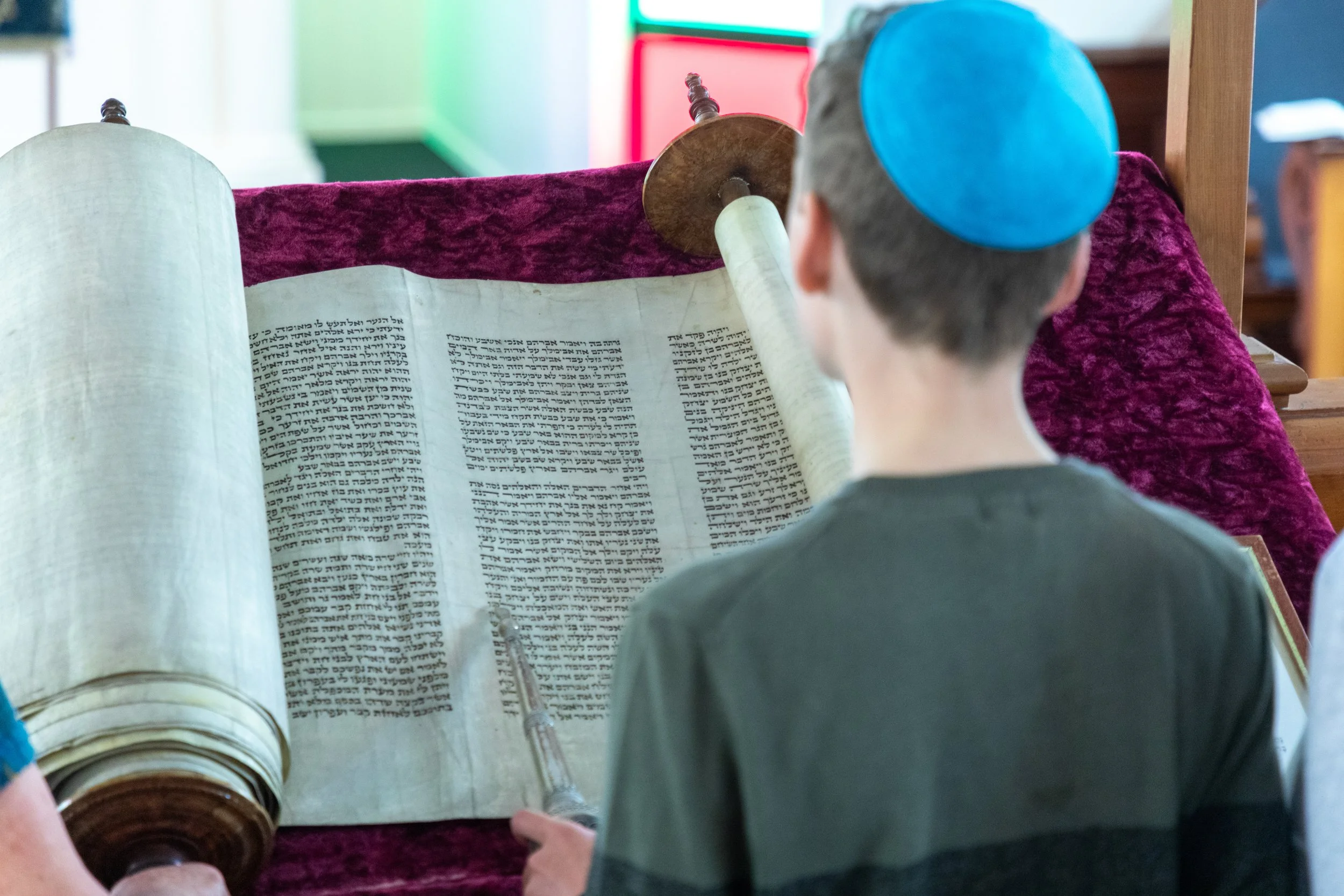
His faith also requires him and other Orthodox Jews to refrain from driving on the Sabbath and High Holidays. Because walking to synagogue was difficult, Mr. Grand invited members of his community to walk from their homes and pray in his house.
This religious liberty case is extremely important. First, the Jewish prayer service caused no apparent inconvenience to Mr. Grand’s neighbors or the city. Second, Mr. Grand’s invitation prompted a strongly hostile response from the city. A neighbor first reported the gathering to the mayor. The city then sent Mr. Grand a cease-and-desist letter, asserting that using his home as “a religious place of assembly and/or operation as a shul or synagogue is not permitted.”
The record suggests more than isolated hostility motivated the city. When Mr. Grand applied to the City’s Planning Commission for a Special Use Permit, the city changed the hearing to a “quasi-judicial” format, “locked the record,” and prevented him from amending his application or submitting additional evidence, which may be additional evidence of outright hostility to the practice of religion.
The mayor also addressed Mr. Grand and his Orthodox Jewish community in terms that appear to confirm his anti-religious bias, stating, “Let there be no question, there is no permission granted here to operate a house of assembly or conduct activities consistent with those at Mr. Grand’s home.”
Although Mr. Grand did not seek to operate a house of worship as defined by the city ordinance, he later filed a federal lawsuit against the city and several officials, alleging violations of federal and state law, including constitutional and statutory claims.
The Grand case asks the following question: Whether the Williamson County Planning v. Hamilton Bank case displaces the First Amendment's chilling-effect doctrine, thus making it more difficult to sue. The Williamson County case established a requirement that a plaintiff in a land-use case must wait until he obtains a final decision before bringing a lawsuit.
Essentially, on appeal to the United States Supreme Court, the Grand case asks whether the plaintiff—who faces a credible government threat, which is intended to deter the exercise of his First Amendment rights—must await a final decision by the Planning Commission before commencing a lawsuit to vindicate his First Amendment rights.
The U.S. District Court for the Northern District of Ohio and the Sixth Circuit Court of Appeals dismissed his constitutional claims on ripeness grounds. Presumably ripeness in Mr. Grand’s case would have been satisfied if Mr. Grand had waited for a final Planning Commission decision. Now Mr. Grand has petitioned the Supreme Court.
Ripeness is a jurisdictional doctrine that courts use to determine whether a legal dispute is ready for adjudication. A case is ripe when the issues are concrete, the facts are sufficiently developed, and a specific, identifiable injury requires resolution.
This doctrine stems from Article III, Section 2, Clause 1 of the U.S. Constitution, which limits federal courts to actual “cases or controversies.” Courts therefore cannot hear disputes that are premature or depend on future events that may never occur.
The decisions of both the District Court and the Sixth Circuit Court of Appeals appear in conflict with the tenor and tone of both the U.S. Constitution and Americans’ long tradition of practicing religion, including prayer, in the home. This is so because a credible government threat that deters the exercise of fundamental rights constitutes a complete and independently actionable constitutional injury. If so, the ripeness doctrine that prevented the lower courts from hearing Mr. Grand’s case is displaced.
Beyond the persuasive appeal of the claim that the existence of a credible government threat deters Mr. Grand’s constitutional exercise of his fundamental rights and thus supports his right to be heard right now, readers should note that during the early republic, Americans often conducted religious practices—including marriages and funerals—in their homes. These gatherings frequently preceded, sometimes by decades, the construction of buildings dedicated to religious worship. For decades, home worship was also common among Baptists in parts of eighteenth-century New Jersey.
More importantly, the dominant legal and policy understanding of religious liberty at the Founding of the American Republic emphasized free exercise rather than mere toleration. Historically, Americans generally viewed religious worship and obedience to conscience as fundamental, inalienable rights.
Given this historical backdrop, Mr. Grand has a strong policy argument that his case should be reviewed now, without waiting for a final decision from the Planning Commission. Whether or not the Supreme Court decides to overturn the decisions of the two lower courts, it seems crystal clear that the City of University Heights has chilled both Mr. Grand’s speech and his capacity to exercise his religion freely.
It is highly doubtful that hyper-technical jurisprudence ostensibly grounded in the ripeness doctrine supports the City of University Heights’ decision to prevent ten men from walking through Mr. Grand’s neighborhood to his house to pray. Equally clear, judicial reliance on hyper-technicalities weakens the bedrock principle that all Americans should have the right to pray in their own homes.
Going down the slippery slope of hyper-technical adjudication undermines the First Amendment of the Constitution and its guarantee that all citizens have the right to practice their religion freely. Given that Mr. Grand has suffered a specific and identifiable injury, he deserves his day in court.