
Will the Rise of Identity Groups and the Collapse of Trust Trigger Civil War in the West?
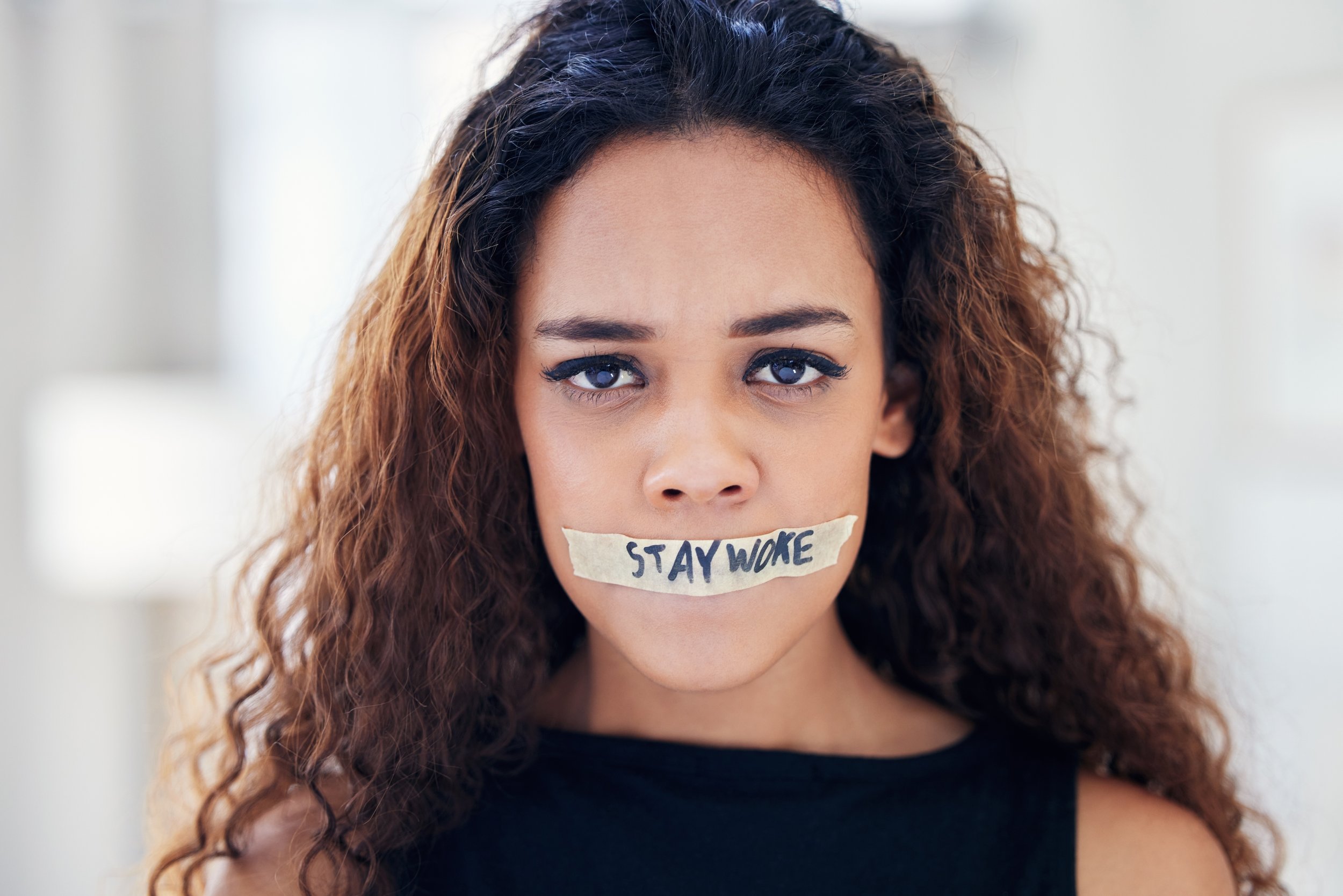
Periods of flowering and decay, of revival and relapse, of skepticism and faith are constant in the history of all peoples and nations. Consistent with this pattern, the West has been plagued by the rise of ideological movements and counter-movements for more than two decades. These tribal movements include the rising rage of the “woke left” and the “woke right.” Both movements are united in their savage disdain for Jews.
As we have previously observed, alarming movements include Christian Nationalism, which can be defined by its fellowship with one of its leading proponents, Joel Webbon. Pastor Webbon, an apparent hardcore antisemitic ideologue, seeking to rescue his followers from “theological” poverty, appears to embrace the possibility of being “called a Nazi.”
As the United States continues to fracture and fragment into opposing camps, the nation has witnessed the rise of Groyperism. Groypers deny the Holocaust while attacking other identity groups. America has also seen the rise of an opposing camp led by left-wing political commentator Hassan Piker, who has prominently accompanied a Michigan senatorial candidate on the campaign trail. Piker appears to revel in his progressive-pro-Hamas views while simultaneously appearing to excuse violence and terror.
The nation has also witnessed the rise of Antifa. This left-wing faction traces its roots back to antiracists who mobilized in the 1980s and who gained prominence after a 2017 clash in Charlottesville, Virginia, with white supremacists. Alarmingly, a recent criminal indictment for money laundering suggests that white supremacist activities were financed, at least in part, by an alleged anti-racist, anti-hate organization, which apparently raised money to finance and perhaps manufacture hate.
The West has collapsed into an eruption of wokeness, identity politics, and identity-group movements generously mixed with seething anger despite theologian Herman Bavinck's declaration that God “made the whole human race” from one blood.
Taken together, this situation indicates that an ever-larger fraction of humans have become lost in the futility of their thinking, manufacturing imaginary gods to serve their own selfish desires. The absence of unifying beliefs, values, and events is evident in the constant fragmentation of humanity into new identity groups, consistent with the worship of self rather than our creator. Opposing such moves, one commentator argues that he needs someone to “save me from myself.”
Self-worship leads inevitably to what theologian Carl Trueman labels the desecration of man, the rejection of God, and the devaluation of our fellow humans. This process allows humans to entrench themselves in ideology and splinter into various groups centered on issues implicating gender identity, racism, feminism, pornography, euthanasia, climate change, hatred of Israel, and transhumanism.
The West’s elevation of identity reached its apex in the recent death of a British man who was stabbed four times and then allowed to bleed out after being cuffed by the police, who were primarily interested in ascertaining whether he was a racist rather than providing aid and assistance.
The West’s celebration and elevation of identity by elite voices is intertwined with, and contributes to, a stark rise in the absence of trust among Westerners. Canadian military historian David Betz observes that the major threat to the security and prosperity of the West emanates from its own dire social instability, structural and economic decline, cultural desiccation, and elite timidity and cowardice.
To be sure, civil war and the decline in trust are rarely the prime concern of rich countries like the United States or much of Western Europe. Hence, civil war and accompanying barbarism rarely surface when governments are perceived as legitimate or operate as strong, stable autocracies. In the first example, the data show that people largely do not rebel because they trust that the political system works justly, whereas in the latter, people do not rebel. After all, autocrats can identify and punish dissent before it becomes a contagion.
But some forces within stable regimes can undermine the government’s legitimacy. Destabilizing forces include growing social distrust, which Betz persuasively argues has rapidly become the West’s default emotion. Consistent with that observation, even before the still-contested Biden election and the COVID-19 epidemic, in 2019, 68 percent of Americans agreed it was necessary to repair levels of “confidence” in society and government, with half the population suggesting that “cultural sickness” is what fading trust represents.
In reality, this process has been underway for quite some time. R. R. Reno notes that the decline in trust began by the end of the New Deal, coinciding with the conclusion that today’s most significant threats to the political health of the West include the breakdown of trust between leaders and the led.
Today, the breakdown in trust takes center stage, since much of the West is oblivious to the possibility that internal conflict is on the verge of erupting. For many individuals and groups, from both the left and the right, violent internal conflict is welcome as a vehicle to shift the world away from Western dominance and remove Christian influences from the world. But a world without Western dominance—as British commentator Konstantin Kisin observes--won’t be neutral, since power won't end. It shifts, thus producing a new dominant civilization with its own values. This shift is unlikely to favor identity movements, identity politics, and new gender movements.
Today’s breakdown in trust includes evidence that the loss of status, which disproportionately afflicts young men and rising unhappiness, which markedly troubles liberal childless women, produces individuals who may be increasingly prone to support violence. Whether such individuals can be accurately categorized as “dangerous losers,” they may become cannon fodder for what is to come, thus threatening the future of anyone under the age of seventy.