
The Supreme Court Restores the President’s Executive Power by Overruling Humphrey’s Executor
In Trump v. Slaughter, a case decided on June 29, 2026, the Supreme Court eradicated almost a century of precedent. In March 2025, President Donald Trump removed Democratic FTC Commissioner Rebecca Slaughter from her post before the expiration of her statutory term, which was set to run until 2029. The President cited policy disagreements, stating her service was "inconsistent with my Administration's priorities," and asserted removal authority under Article II of the Constitution. To be sure, Slaughter contested the President’s decision.
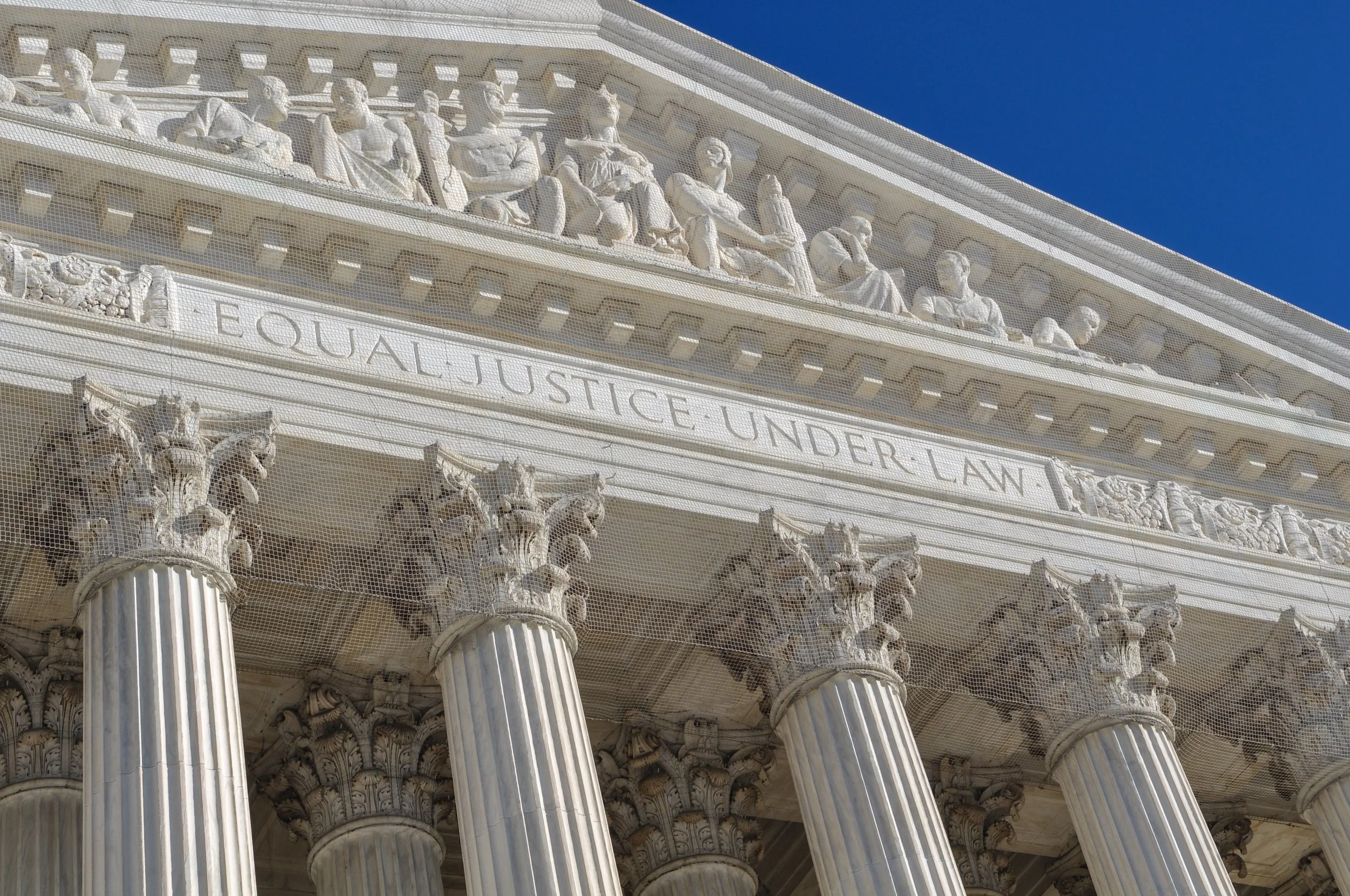
The Supreme Court ruled in favor of the president. The Court's decision upheld President Trump’s power to remove a Federal Trade Commissioner at will and accomplished three things. First, it restored virtually unencumbered presidential power. Second, it dealt a serious blow to America's burgeoning Deep State bureaucracy, which is also known as the Administrative State, comprised of unelected experts. Third, this far-reaching decision is sure to have implications for individuals, churches, private schools, and private businesses.
More specifically, the Court expanded executive power to its constitutional limit by allowing President Trump and future presidents to fire leaders of independent agencies for any reason or no reason at all. Congress designed independent agencies, such as the Federal Trade Commission (FTC), to grant commissioners full-throated independence. This legislative sleight of hand by Congress was designed to protect regulators from at-will removal and insulate them from political pressure coming from the executive or congressional branch. This approach allowed regulators to drive policy on ideological grounds while insulating them from the will of the people.
This approach, contrary to the Constitution, allowed for the creation of a fourth branch of government that became accountable to itself and its administrative preferences. The Supreme Court upheld this approach ninety years ago in the Humphrey’s Executor V. United States case. In Humphrey’s Executor, President Franklin Roosevelt removed William E. Humphrey, a Federal Trade Commissioner whose policy views conflicted with New Deal aspirations. The Federal Trade Commission Act permitted removal only for “inefficiency, neglect of duty, or malfeasance in office.” A unanimous Supreme Court upheld Humphrey’s right to remain a commissioner.
The Supreme Court in Humphrey’s Executor ruled that Congress could impose limits on the president’s removal authority because the FTC was not a purely executive body. Whether this decision was the product of “an activist, anti-New Deal Court bent on reducing the power of President Franklin Roosevelt,” the Court described the Commission as an independent, nonpartisan body of experts that performed quasi-legislative and quasi-judicial functions. The Humphreys case provided a constitutional foundation for independent agencies within the Federal government, thereby insulating commissioners from at-will removal.
The Trump v. Slaughter case marks the collapse of Humphrey’s Executor precedent and re-establishes executive power, meaning that all principal officers who exercise executive power must remain removable by the President even if the statutory language under which such officers were appointed granted them protection against termination. The power to terminate or remove, residing in the President of the United States, constitutes an indispensable mechanism of presidential supervision and democratic accountability.
To be sure, the dissenting opinion in Slaughter views independent agencies as a constitutionally permissible congressional response to the need for expertise, continuity, and bipartisan administration in specialized regulator domains. From the dissent’s point of view, what we are witnessing in this case is not simply the fate of one Federal Trade Commissioner; rather, what is at stake is the allocation of power between and among Congress, the President, and administrative institutions that have long occupied the space between the passage of legislation, the execution of statutes, and the adjudication of disputes, preferably from the perspective of experts.
Rejecting the dissent’s preferences, the majority opinion in Trump v. Slaughter granted the president the constitutional power to remove individuals who exercise executive power. Citing the "Decision of 1789," in which the First Congress, under James Madison, recognized the President’s inherent removal power, the Supreme Court’s majority opinion strengthens political accountability through the President.
By doing so, this decision destabilizes almost a century of institutional design and congressional power. It also places the future of constitutionally distinct and perhaps constitutionally suspect institutions, such as the Federal Reserve, in the crosshairs. Most importantly, this decision diminishes the power of experts. Arguably, that is a welcome development for rank-and-file Americans who have been recipients of administrative overreach by the ever-expanding power of experts.