
Writing during the 19th Century, Charles Dickens described the French Revolution: “It was the best of times, it was the worst of times, it was the age of wisdom, it was the age of foolishness, it was the epoch of belief, it was the epoch of incredulity, it was the season of Light, it was the season of Darkness, it was the spring of hope, it was the winter of despair, we had everything before us, we had nothing before us, we were all going direct to Heaven, we were all going direct the other way . . .”
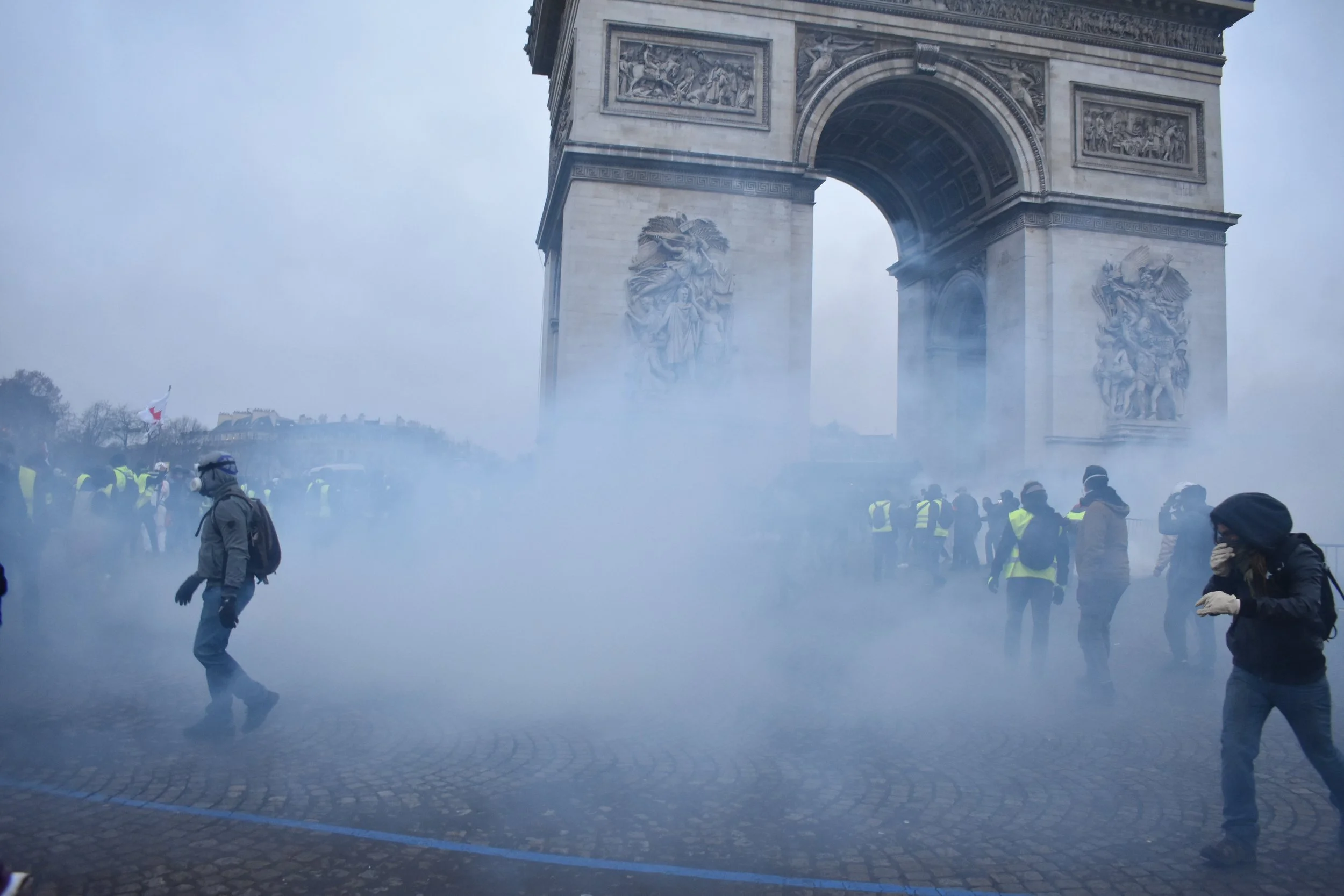
History may not necessarily repeat itself, but it often rhymes. Contemporary history rhymes with Dickens’ A Tale of Two Cities. While the once-glorious streets of Paris, Toulouse, Marseille, Bordeaux, and Lyon are filled with putrid smoke, Paris’ $75 million Nelson Mandela High School goes up in flames, and while France’s migrant populace attempts to steal another Louis Vuitton handbag, French President Emanuel Macron can be seen attending, if not dancing, at a Celine Dion concert.
After deflecting responsibility and blaming President Trump for France’s dilemma, President Macron pins the rioters' anger on the price of oil. Objective observers greet Macron’s claims with well-deserved laughter. At the same time, commentators who defend the rioters claim that the fire at France’s Nelson Mandela High School was designed to draw attention to underfunded education, thus suggesting that nothing improves school funding like burning down a school.
No credible observer can now claim that the rioting, defacing statues, or the fires, led by demonstrators standing by pre-delivered pallets of rocks, can be disconnected from the fact that France’s insurgents are largely comprised of left-wing immigrants who apparently hate and therefore wish to destroy Western culture and values. Nor can the rioters be disconnected from evidence showing that many carried Palestinian or communist flags as part of their embrace of destruction. Consistent with such evidence, Thibault de Montbrial, a resilient man who serves as France’s chief prosecutor in Islamist terror cases and who has had to live under 24/7 armed guard for 10 years, observes that allegiance to Islam is a persistent background factor in the troubles that France, if not the West, now must face. On this view, the rioters appear to be predators in France’s ongoing spiritual and civil war.
Every society has to wrestle with questions of immigration and identity, culture, education, and its future. These questions form the basis of Renaud Camus's scholarly work and resonate beyond the French context. We must—Americans, non-Americans, Christians, and non-Christians —reckon with these issues. Otherwise, our nation and our lives will end up in flames as we deeply inhale smoke all the way down.
Every choice—between wisdom and foolishness, belief and incredulity, courage and cowardice—matters. Our decisions shape our lives, our community, and our nation as we approach judgment day. They either lead us closer to God or further away as we face the pull toward good or evil, courage or spinelessness, heaven or the Lake of Fire.
As France burns, as Great Britain and much of Europe prepare to follow suit, and as America faces days of reckoning ahead, it becomes clearer than ever that nothing on this earth is more permanent than understanding God and the future of the human soul. We must also understand what Michael Kendrick calls the distinction between Parousia (closeness to God) and Apousia (eternal separation from God).
Against a backdrop in which France is destined to find out whether any hard men remain, who are prepared to overcome what weak men have permitted, it becomes clear we live in an age of conflict. Evidence of future conflict is inescapable. Such evidence raises the question: where will we be found, and what will we do before the burning, if not shooting, starts?