Imagine a church filled with people who share a common faith, worship together, and genuinely care for one another. It has a thriving children’s ministry, committed volunteers, and a congregation that takes seriously its responsibility to serve the surrounding community.
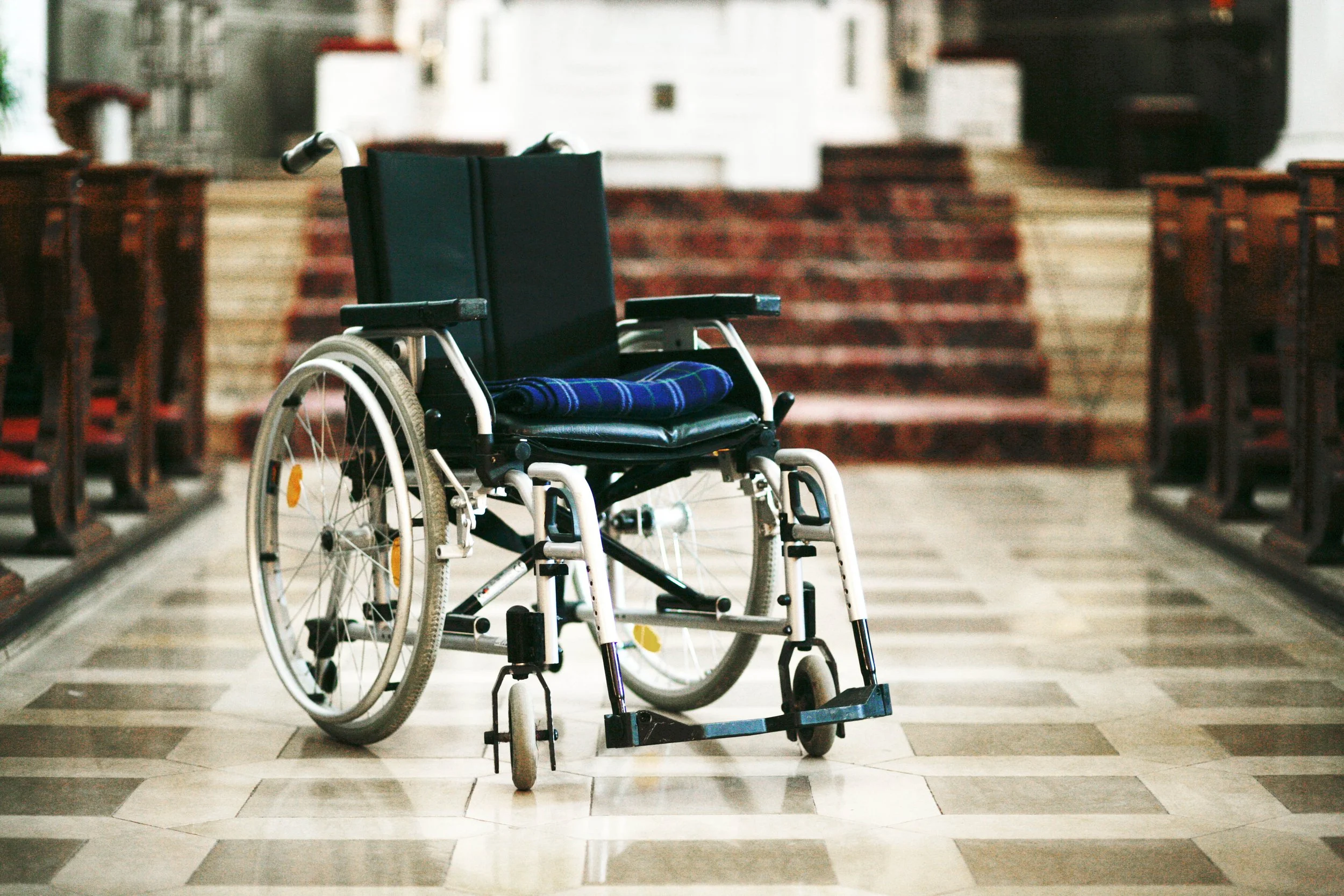
By most measures, it’s a healthy church.
But what if some of the people who could contribute most meaningfully to that community aren’t there?
What if there are families who would love to attend but haven’t found a place where their children can participate? What if there are individuals whose experiences, perspectives, and gifts could enrich the congregation, but whose needs have never been considered?
During my ten years working in disability ministry and advocacy, I came to appreciate that making a church accessible and creating a community where people genuinely belong are two very different things.
But I also came to believe something else: when individuals with disabilities are absent from the life of a congregation, it isn’t only those individuals and their families who miss out.
The entire church loses something.
An Indispensable Part of the Body
In 1 Corinthians 12, Paul describes the Church as a body made up of many different members, each with a distinct role and purpose.
He goes so far as to say that the parts of the body that seem weaker are indispensable.
It’s a remarkable description of Christian community.
Paul doesn’t describe a body in which some members exist merely to receive the generosity of others. He describes one in which every member matters to the health and functioning of the whole.
And importantly, his words challenge our tendency to assign greater value to those whose contributions are most visible or whose abilities most closely resemble our own.
For churches, this offers a compelling reason to think beyond charity or accommodation.
Individuals with disabilities are not simply recipients of ministry. They are members of the body of Christ, with relationships to build, gifts to share, and contributions to make.
And when their participation is limited or overlooked, the entire congregation may be diminished.
The Church Needs the People It Serves
One of the most important lessons I learned in disability ministry is that inclusion shouldn’t be understood simply as something we do for people with disabilities.
It is something we build with them.
There’s a meaningful difference between making room for someone and recognizing that the community is better because they’re part of it.
Consider a child with an intellectual disability who develops friendships with peers in Sunday school. Those relationships can encourage children to communicate, cooperate, and understand one another in ways they might not otherwise experience.
Or consider an adult with a physical disability who brings valuable insight to church leadership about challenges that others may never have encountered.
These individuals are not merely beneficiaries of a church’s generosity. They are participants in its life, bringing their own personalities, talents, experiences, and perspectives.
And their contributions need not be extraordinary to be meaningful.
The same is true of every member of a congregation. We don’t measure the value of someone’s participation solely by their productivity, independence, or ability to serve in a particular role.
A church that lacks this diversity isn’t simply failing to serve a particular population. It may also be missing opportunities for deeper relationships, broader understanding, and a more complete expression of Christian community.
Accessibility Is Only the Beginning
Churches have made meaningful progress in recognizing the importance of accessibility. Many have invested in ramps, accessible restrooms, designated seating, and other accommodations that make participation possible.
These improvements matter. Without them, some individuals and families may never make it through the front door.
But accessibility is ultimately about removing barriers. Belonging requires something more.
A person can attend church every Sunday without developing meaningful relationships. A child can be accommodated in a classroom without being included in its activities. A family can be warmly greeted at the entrance while quietly feeling that their presence creates an inconvenience.
Recent research reinforces this distinction. A study led by researchers at Baylor University examined the experiences of parents raising children with disabilities and identified barriers to participation in church life involving congregational attitudes, volunteer support, communication, and leadership.
The findings suggest that accessibility cannot be measured solely by the physical features of a building or the availability of a specialized program.
We also have to consider the experiences of the people those accommodations are intended to serve.
What the Law Requires—and What It Doesn’t
There is an interesting legal dimension to this conversation.
Under Title III of the Americans with Disabilities Act, businesses and many other places open to the public are required to meet accessibility and nondiscrimination standards. Religious organizations, including churches, generally enjoy an exemption from those Title III requirements.
Tennessee law also recognizes certain protections for religious organizations, although state and local building codes may still impose accessibility requirements, particularly when facilities are constructed or renovated.
The legal details matter, and exemptions shouldn’t be confused with a complete absence of obligations.
But the more interesting question for churches may not be what the law requires.
It’s what their faith inspires them to do voluntarily.
A congregation may have considerable discretion over the accommodations it provides. Yet the absence of a particular legal requirement doesn’t necessarily answer whether providing that accommodation would be worthwhile.
For Christians, the standard of hospitality should not begin and end with regulatory compliance.
Good Intentions Aren’t Always Enough
I recognize that many churches face substantial practical challenges.
A small congregation may lack the resources to hire specialized staff. Volunteers may feel unprepared to support children with complex developmental or behavioral needs. Church leaders may worry about safety, liability, or their ability to provide appropriate care.
These concerns are legitimate. It would be unfair to suggest that every church should be able to offer every possible accommodation.
But a lack of resources doesn’t necessarily mean a lack of options.
Sometimes the most meaningful improvements begin with asking individuals and families what would help them participate more fully.
Perhaps a child would benefit from a quieter environment during worship. Perhaps a volunteer could receive additional training. Perhaps a family needs reassurance that an unexpected disruption won’t be met with frustration or embarrassment.
And perhaps the most important change isn’t a new program at all, but a shift in how the congregation understands its responsibility to one another.
The goal isn’t to create a perfect ministry. It’s to develop a community willing to learn, adapt, and recognize the contributions of people whose needs and experiences may differ from our own.
A Church That Doesn’t Know What It’s Missing
Most churches genuinely want to welcome individuals with disabilities and their families. Many have already made meaningful efforts to do so, often with limited resources and dedicated volunteers.
But perhaps the most important step isn’t launching another program or making another improvement to the building.
Perhaps it begins with recognizing that the people we hope to welcome have something our congregations need.
A church may have excellent worship, thoughtful teaching, vibrant ministries, and a strong sense of community. Yet it may still be missing relationships, perspectives, gifts, and contributions that could make that community richer.
And if those individuals and families have never been given a meaningful opportunity to participate, the congregation may not even recognize what’s absent.
So perhaps the question isn’t simply whether our churches are accessible or welcoming.
It’s whether we recognize what we’re missing when they aren’t.
Because the Church was never intended to be a community in which some people belong and others are merely accommodated.
It was intended to be a body in which every member matters.