
Transhumanism, Billionaires, French Theory, and Christianity
A common denominator driving radical ideologies within the postliberal West is the assumption that everything, including our biological identity, is simply a social construct. This perspective accepts that nothing is innately normal, nothing is inherently beautiful, and everything we possess is or can be constructed by man-made, self-created values on a road that leads to perfection.
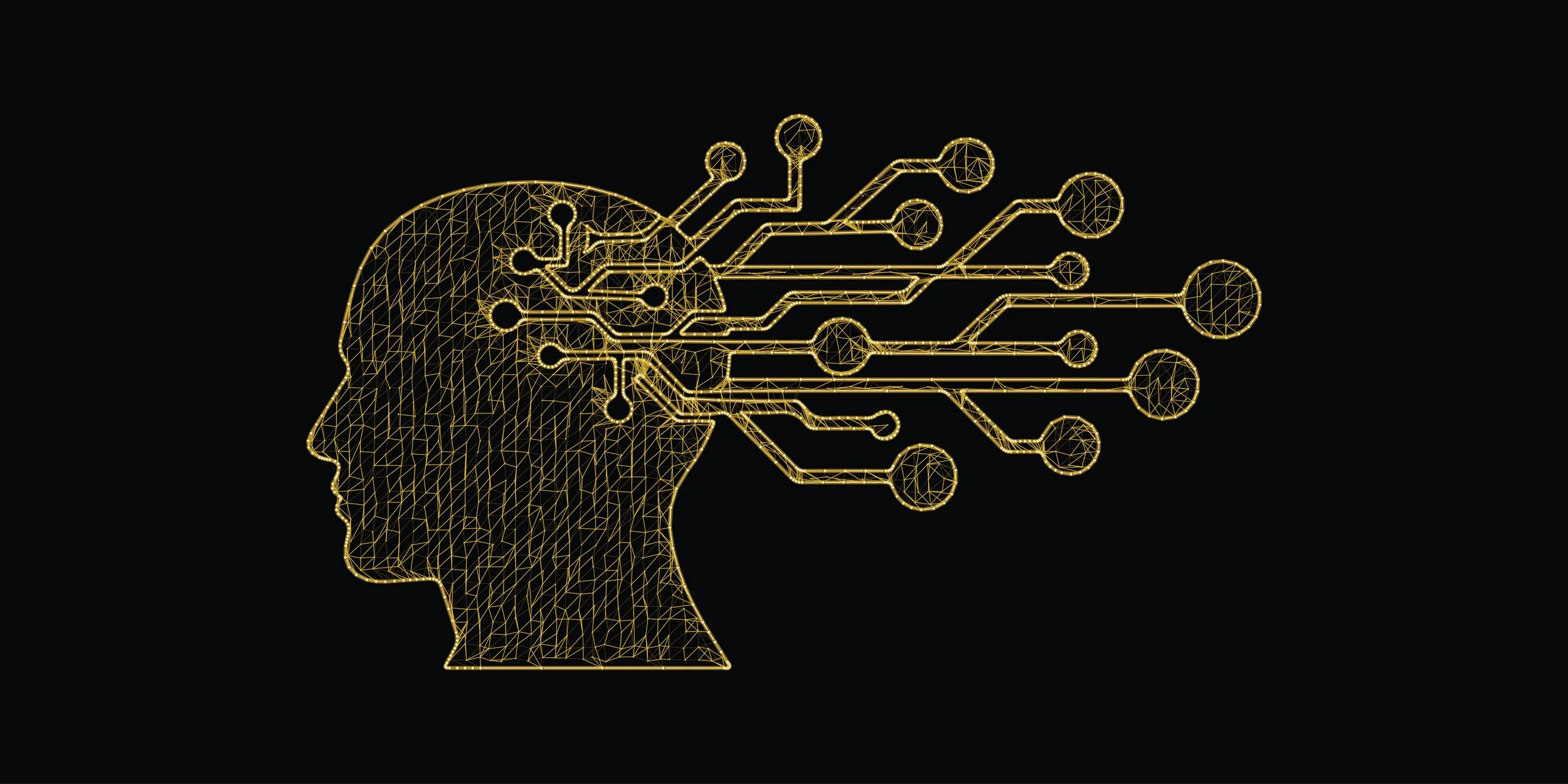
On this view, science, medicine, and law ought to prepare us for a future that represents the triumph of human construction rather than God’s sovereign creation. This is not a new idea.
Theologian Miroslav Volf observes, far before our time, that the Renaissance humanist Giovanni Pico della Mirandola, in 1486, offered an imaginary yet highly inventive take on creation and human origins. Mirandola suggested that our Creator, upon speaking to the world’s first human, cautioned his creation by suggesting that we are made neither of heaven nor of earth, neither mortal nor immortal, so that with freedom of choice we have the power, indeed the right to fashion ourselves in whatever shape we prefer.
Westerners, as offspring of the Renaissance and as inheritors of the Enlightenment tradition, which owes much of its force to the Christian emphasis on freedom of choice, have embraced the possibilities inherent in Mirandola’s sophistry with unrestrained glee.
Today, propelled by the strength of wealthy billionaire donors, Transhumanism has achieved takeoff velocity in the West. But first of all, writer Jennifer Bilek argues that a handful of billionaires created the transgender "Movement." She further asserts that the
primary catalysts driving the gender industry are rooted in technological developments entwined with an unfettered market. Medical-sex identities, along with technological reproduction, are at the forefront of attempts to advance our species beyond our current human borders.
Few observers are as well-informed as Bilek. She argues that transgenderism is the reproductive front of transhumanism. Bilek also argues that what we are witnessing is not an evolution in human understanding, but the rise of an industry that monetizes dissociation from the body for profit.
In her view, transgenderism constitutes the strategic linking of an agenda aimed at deconstructing reproductive sex with the civil rights movement, which was pure genius—a metaphorical fox in the henhouse, but dressed as a hen.
But before billionaires underwent a deeply felt conversion experience to transhumanism—a move that ultimately implicates della Mirandola’s 15th-century views —much of the West, starting in our universities, including nominally Christian educational institutions, had become infected by French Theory and other woke ideas, thus enabling the West to pursue an illusion.
This infectious move, which is rich in Marxist assertions, propels the frontier of exploration forward and jettisons the notion of limits, thus providing fertile ground for all sorts of new identities to form in our imagination. Quite consistent with the theological view that God does not impose himself on us, humans since time immemorial, have been free to choose all sorts of things, including disaster.
Importantly, French Theory allows Della Mirandola’s fictional take on creation, his infinitely imaginative and freely chosen ideas, as well as moderns' affection for woke identities to take flight.
After all, French philosopher-historian Michel Foucault takes the view that there is no such thing as truth, just power. Philosopher Jacques Derrida claims that truth is infinitely malleable. And French philosopher-literary critic Gilles Deleuze asserts that seeds were more important than fully developed trees because becoming is more important than being.
Taken together, such revolutionary views indicate the transcendent power of French Theory. Equally clear, such views echo Nietzsche’s great claim that truth is merely a mobile army of metaphors. This means that in our era, the notion of truth is often seen as nothing more than a fictional claim of doubtful provenance. Today, Nietzsche’s views have attained prominence in church pulpits on the road to deconstructing God and His salvific purposes.
French Theory, correctly understood, indicates that there is no fixed truth and no fixed boundary on who or what we can become, because all of life consists of the pursuit of our own truth, even if this pursuit yields an illusion. Hence, we—you and I—have it within our power to become our own creators. And we are urged to move swiftly and forcefully down this road because otherwise the tide of human progress will be stifled.
Against this backdrop, Christian theology and the views of theologians like Herman Bavinck seem positively archaic. Nonetheless, what is urgently required is to recover an accurate understanding of the origin, essence, and purpose of Man. Bavinck adds the following contention, which aims to recapture human origins, our present, and our future: Reality remains the same, regardless of whether we form a true or false idea of it. But the same holds true concerning the origin of things. The world came into being in the way it did, and not in the way we wish it or suppose it.
It is doubtful that della Mirandola’s ideas, transhumanism itself, or the Marxism embedded in French Theory can satisfy Man’s search for reality or meaning. But opposing such ideas and calling Man to return to reality will require hard work. Indeed, it is likely that any worthy effort directed toward reclaiming Bavinck’s notion that God and God alone is man’s highest good, that eternal life proceeds from the knowledge of the true, eternal, and awesome God, and that God has made himself accessible, will be the work of this generation and many generations to come.
To believe otherwise is to fall prey to an illusion.