
Will Texas’ Ten Commandments Law Survive Supreme Court Scrutiny?
Texas Senate Bill 10 (S. B. 10) requires public schools to display a state-prescribed version of the Ten Commandments in every classroom. This month, Rabbi Nathan, on behalf of herself, her minor child, and several others, filed a petition for a Writ of Certiorari seeking Supreme Court review.
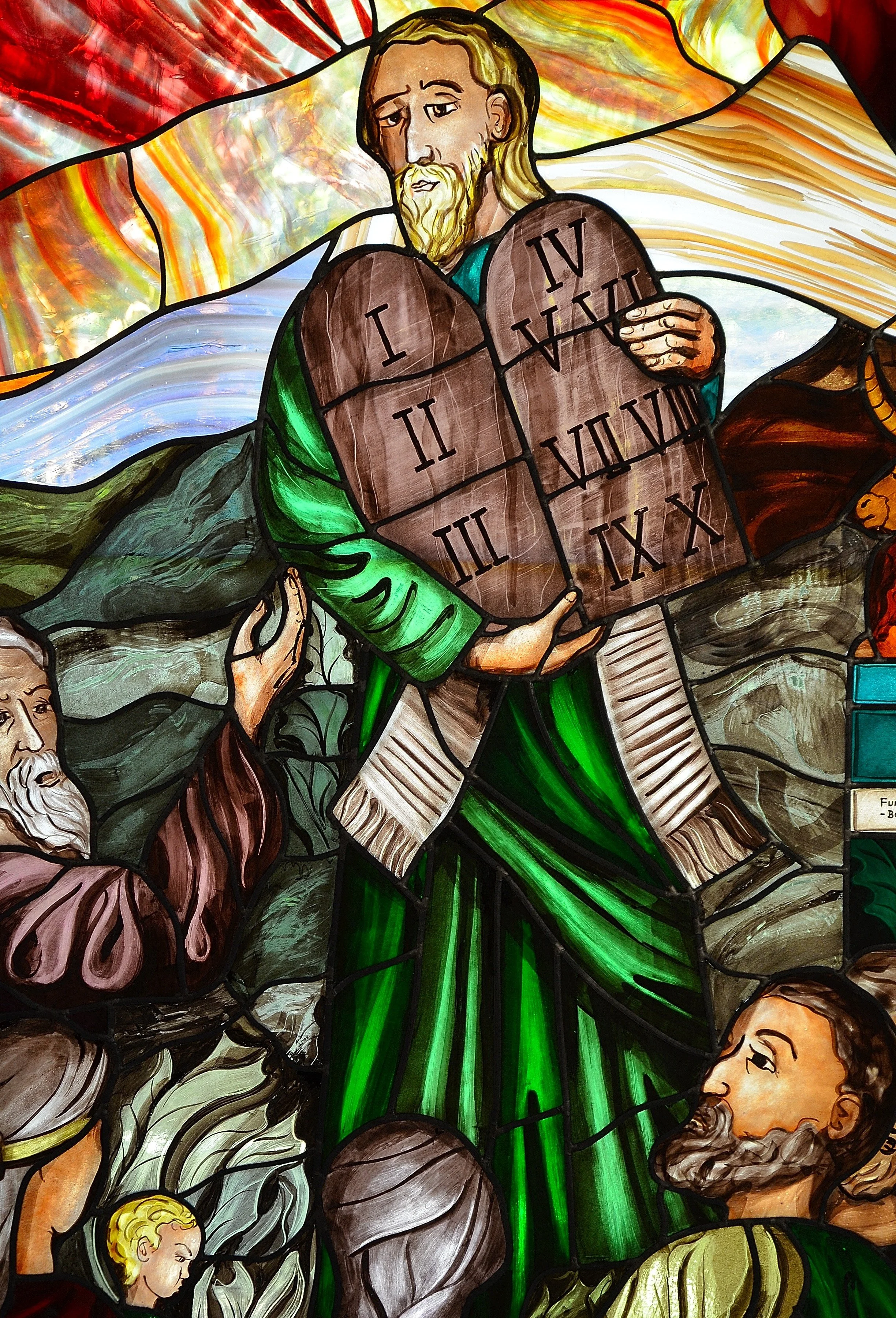
In essence, a group of Texas families is challenging S.B. 10, a 2025 Texas law requiring public schools to conspicuously display a state-selected Protestant version of the Ten Commandments in every classroom. As the ACLU notes, nearly 50 years ago, the Supreme Court overturned a similar Kentucky law on grounds that it violated the First Amendment.
Despite the Supreme Court’s decades-old decision, the Court of Appeals ruled that S.B. 10 does not violate the Constitution. Now the challengers, led by Rabbi Nathan, have asked the Supreme Court to hear the case and block the law from taking effect. The parents argue that the First Amendment bars states from imposing scripture on public school students. They also contend that families—not politicians or government officials—have the primary right to guide their children’s religious beliefs and education.
The plaintiffs’ petition presents two questions. First, the petition asks whether the Establishment Clause of the Constitution forbids a state from mandating the permanent, conspicuous display of a government-selected version of the Ten Commandments in every public-school classroom in Texas. Second, the petition asks whether the permanent display of the Ten Commandments interferes with parents’ Free Exercise Clause rights to direct their child’s religious education and burdens a child’s religious freedom.
In their lawsuit, the parents sought an injunction blocking the scriptural displays from going up in their children’s school districts — and they won at the district court level. The district court ruled that the Ten Commandments law violates both the Establishment and Free Exercise Clauses of the First Amendment. The district court’s decision was on firm ground. After all, a 1980 Supreme Court decision in an ACLU lawsuit struck down a similar Kentucky law.
On the other hand, the en banc U.S. Court of Appeals for the Fifth Circuit reversed the district court in April 2026. The appellate court upheld S.B. 10, clearing the way for the Ten Commandments to be posted in classrooms. In response, the families in Nathan v. Alamo Heights and the families in a similar lawsuit challenging S.B. 10, Cribbs Ringer v. Comal Independent School District, filed a petition for a writ of certiorari with the U.S. Supreme Court in August 2026. They have asked the Court to hear both cases and reverse the appellate court’s rulings, thereby protecting the families’ perspective on religious freedom.
If the Supreme Court accepts the plaintiffs’ petition against the public school districts, the Justices will have an opportunity to reconsider its 1980 precedent in Stone v. Graham. In the 1980 case, the Court ruled that a Kentucky law requiring public schools to display a framed copy of the Ten Commandments violated the Constitution. As Amy Howe observes, the Stone v. Graham Court wrote that “if the posted copies of the Ten Commandments are to have any effect at all, it will be to induce the schoolchildren to read, meditate upon, perhaps to venerate and obey, the Commandments.”
But in the 46 years since Stone was decided, American religious-freedom jurisprudence has changed considerably. Stone v. Graham rested on the Supreme Court’s rule in Lemon v. Kurtzman. Under the Lemon test, a state statute would not violate the Establishment Clause if (1) it were found to have a secular purpose, (2) did not promote or restrict religious beliefs or practices, and (3) did not foster excessive church-state entanglement. However, in 2022, in Kennedy v. Bremerton School District, Justice Gorsuch’s opinion indicated that the Lemon test had long since been abandoned.
Justice Gorsuch argued that Lemon had been replaced by a requirement that judges examine the nation’s founding-era religious history and the drafters' understanding of the Constitution. On this view, a state statutory provision such as Texas’ Ten Commandments rule must now be reviewed under the standard enunciated in Kennedy.
If the Kennedy v. Bremerton decision confirms that the Lemon test has been abolished, it can be argued that Texas’ alleged violations of the Establishment Clause hinge on whether the statute mandating the display of the Ten Commandments is consistent with the founding era’s view of religious establishment. Failing to find that the Texas law tells churches, synagogues, or mosques what to believe or how to worship or whom to employ as priests, rabbis, or imams, and given the law punishes no one who rejects the Ten Commandments, the Fifth Circuit Court of Appeals allowed the Texas law to withstand judicial scrutiny. The court reached its decision—by a vote of 9-8—even though the statute (1) selects a particular textual version of the Bible associated with the Protestant King James Bible and (2) the displays appear in public-school classrooms, where attendance is generally compulsory.
The Fifth Circuit’s view of the Constitution faces still another hurdle, one posed by the Supreme Court’s 2025 decision in Mahmoud v. Taylor. In Mahmoud, the Supreme Court agreed that the Maryland school board violated the rights of parents to freely exercise their religion when it refused to allow them to opt their children out of LGBTQ+-themed instruction.
If the U.S. Supreme Court accepts the Texas case, Christian parents may face a demanding question: which principle should take precedence? On one hand, Mahmoud v. Taylor affirmed parents’ rights to raise their children in accordance with their religious convictions. On the other, supporters of S.B. 10 may view the classroom display of the Ten Commandments as consistent with their religious values. The case therefore places two commitments in tension: protecting parental control over religious formation and permitting a state-mandated religious text—one that observers may see as a form of government promotion of religion—in public-school classrooms.