
Can a Mother Take Her Child to Church?
The Maine Supreme Judicial Court Will Decide
The United States Supreme Court has clearly and unmistakably established parents’ right to freely exercise their religion, including the right to “direct the religious upbringing of their children.” Nonetheless, a Maine district court has issued a custody order prohibiting a mother from taking her daughter to church. In December 2024, the court prohibited Emily Bickford, the parent with primary custody, from bringing her daughter, Ava, to Calvary Chapel in Westbrook, Maine.
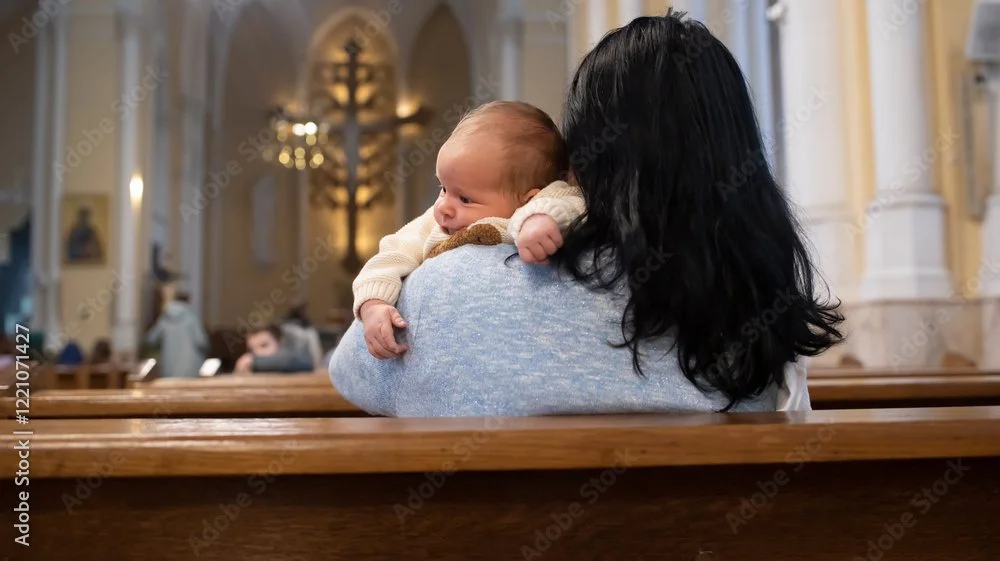
Although this decision is now on appeal to the Maine State Supreme Judicial Court, readers should observe that the district court sided with the child’s non-custodial father, Matthew Bradeen, ruling that some of the church’s teachings could be psychologically harmful to the twelve-year-old child. The court reached this decision even though Ava freely attended her church for more than three years and expressed her desire to be baptized. But there is more.
Grounded in John Stuart Mill’s audacious claim that society should seek to avoid the infliction of harm, and purportedly designed to advance human liberty, including freedom of expression, the court’s custody order actually does the opposite. Here is how.
First, the district judge prevents Ava from studying the Bible or “religious philosophy” or from discussing her faith with her own mother. Second, and equally bizarre, the district court blocks Ava from participating in Christmas events.
In addition, the district court sought to limit Ava’s mother’s liberty by diminishing her First Amendment rights. Matt Staver of Liberty Counsel rightly observes that this decision—giving the father the sole right to decide whether a child attends Calvary Chapel—constitutes a nuclear option.
In essence, the Maine district court accepts the father’s view of freedom and liberty. On the father’s account, the practice of religion amounts to an oppressive and harmful constraint on his daughter’s freedom. On this view, the practice of religious faith ought to be controlled and highly monitored by the state.
But once again, we should remember that Mill’s argument for freedom of expression was not meant to expand freedom of religion but to undermine it. After all, Mill’s approach operates just like that of Ava’s father, meaning that Mill and the district judge would be pleased to undermine religious faith because it is seen as a relic that oppressive, custom-bound traditionalists have created.
Consistent with this intuition, the district judge accepted testimony from a Marxist and former sociology professor, who asserts that any church that believes in the Bible is a cult that inflicts harm on children. This dystopian viewpoint allows Ava’s father’s distaste for religion to trump her free exercise rights and the rights of her mother, the custodial parent, to direct the religious upbringing of her daughter.
Ava’s mother, Emily, the district court concludes, “is a fit parent except for the fact that she is a Christian.” Judicial hostility toward religion can be found since the district judge mocked Ava and Emily’s faith by refusing to capitalize the word “God.” Further establishing that there are grounds for pessimism regarding the fate of religious liberty in both the Latin West and the United States, the judge chastised Ava’s mother for allowing the daughter to receive prayer.
Judicial hatred of religion is manifest in the district judge’s decision to disallow Ava from associating with any of her church friends or any member of Calvary Chapel Portland. Second, Ava is subject to a court order barring her from meeting with an individual who later begins attending Ava’s church. Third, Ava cannot have any contact or participation with any religious organization, including the Salvation Army, or a food bank, homeless shelter, or crisis pregnancy center.
Such unmistakable hatred operates in conflict with former Secretary of State Clinton’s claim that “religious freedom provides a cornerstone for every healthy society.” She further argues that the “right to believe or not believe, and to practice one’s convictions without fear of government interference or restriction, is a basic human right.” In other words, Secretary Clinton disputes the claim that religion and freedom of religion are necessarily harmful.
Every Christian and every Christian church leader should carefully consider the implications of the Maine district court opinion infringing on the freedom of religion rights of Ava, as well as the rights of her mother, Emily Bickford. Even though the Maine Supreme Judicial Court suggested during oral arguments in a November 2025 hearing that the Maine district court’s decision evinced hostility toward religion, readers should be keenly aware of the fact that contemporary culture has become increasingly hostile to biblical faith.
After all, we live in a world where Nigerians face genocide leading to martyrdom every day. The question becomes: why should American Christians be immune to the consequences of a venomous virus fostered and advanced by John Stuart Mill and a Maine district court judge? Responding to this question will require eternal vigilance.