
Spurgeon on Doctrine: The Lord’s Supper
Brethren, these symbols are but as the veil before the holy of holies; you must look beyond the symbols to that which is within the veil; or else, of what use are the signs to you? The bread is nothing, the wine is nothing; that which the bread sets forth is everything, feed thou on that; that which the wine portrays is everything, see to it that thou art a partaker of that.
- The Lord’s Supper - September 8, 1861
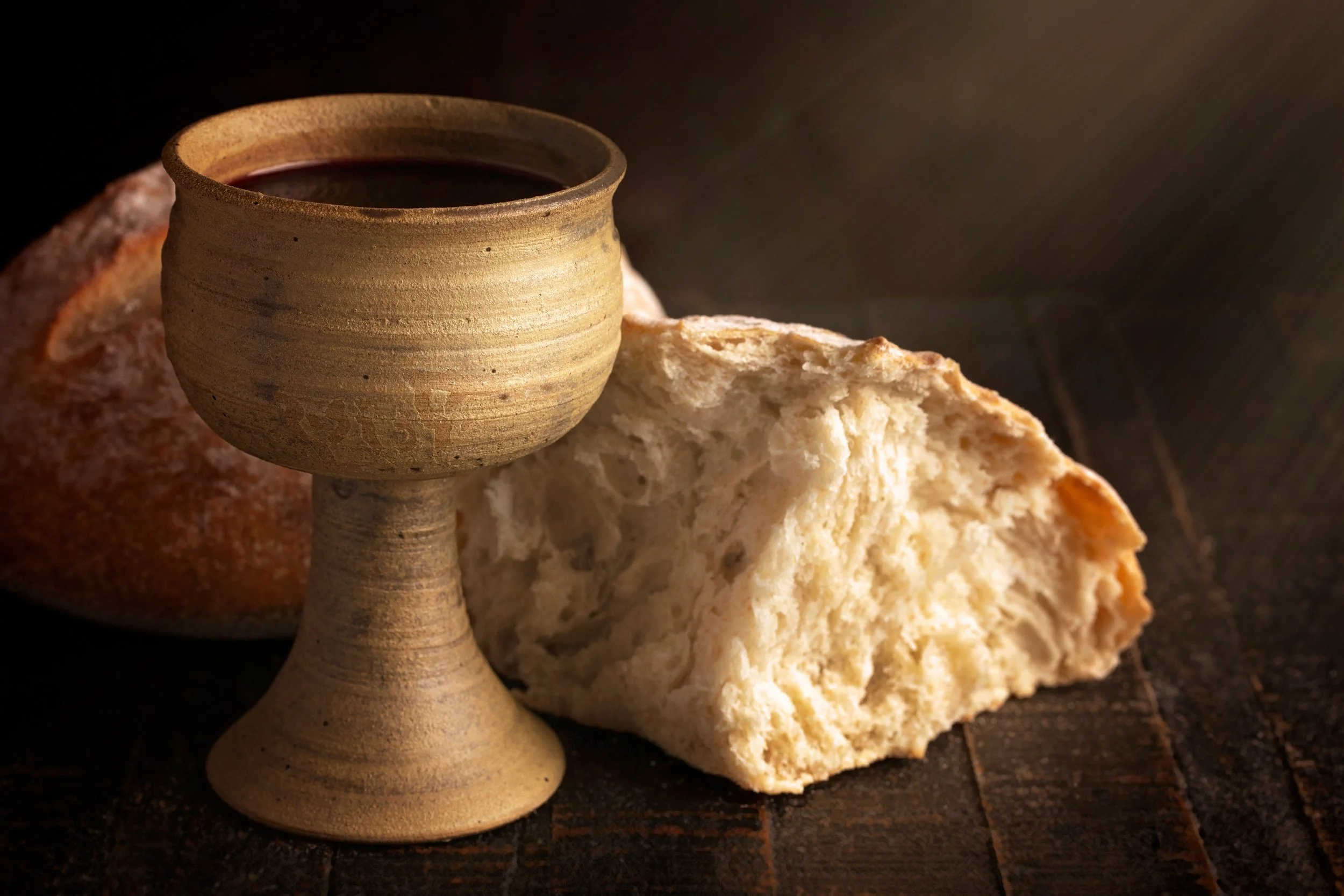
Christ instituted only two ordinances for His church. Baptism and Lord’s Supper are the only two. Any and all other pretended sacraments should be abhorred and rejected. In observing the Lord’s Supper the people should not approach in ignorance of the significance of the observation. It is the great reminder of what Christ did on the cross. It is the remembrance of His death, whereas, baptism is the expression of the believer’s identification with the life, death, and resurrection of Jesus.
Meaning
This simple feast of the Lord’s supper, consisting of the breaking and eating of bread, and the pouring forth and drinking of wine, has two objects upon its very surface. It is intended as a memorial of Christ, and it is intended as a shouting or a manifestation of our faith in Christ, and of Christ’s death, to others. These are the two objects: “This do ye in remembrance of me;” and “Thus ye do shew the Lord’s death till he come.”
- The Lord’s Supper, Simple but Sublime! - 1866
The observation of the Lord’s Supper is both a memorial and a proclamation. As a memorial, there are two symbols at work in the Supper. The bread broken represents all of the anguish, the nails, the scourging of the Lord, the cross, and the thorns. The wine represents the blood taken on by Christ at the incarnation as well as the blood pressed and poured fourth as an atonement for sin. Both elements of the Lord’s Supper act as symbols of Christ’s effective action for man.
Brethren, let us come to those two symbols, and here discern Christ’s body broken for our sin, and view his blood streaming forth for our redemption.
- The Lord’s Supper, Simple but Sublime! - 1866
The taking of the elements brings about the remembrance of Christ’s action on behalf of mankind. It is a visible reminder to both you and the community of the church. Therefore, it is both a personal and a joint memorial. The purpose of the elements is to regularly remind the believer of the price God paid to be in fellowship with His people.
Just as I must eat this bread, or it will not nourish me, so must I take Jesus Christ personally, by a distinct act of faith, and take him to be mine; and as this bread, after I have taken it, incorporates itself with me, so that there shall be no distinction between this bread and my body, but it shall help to build up the structure of my body. So when I take Christ and trust him, he becomes one with me, and I become one with him, and my life is hid with him; and He saith that because he lives I shall live also.
- The Witness of the Lord’s Supper
Preparation
No man is to come to that table, no woman is to draw near, without the previous self-examination. No age will excuse us, for there have been aged hypocrites, as well as young deceivers. No office will exonerate us from this examination, for there was a Judas even among the apostles. The highest degree in the Church of God may consist with the most rotten formality. We are to examine ourselves each time we come. Each man is to do so. No one is to shirk the personal duty. Everyone is to undertake it as in the sight of God.
- Preparation for the Lord’s Supper
Every person before approaching the table of the Lord must take an honest self-examination. This examination is not of those around you, before you, or anywhere else. It is inward in concert with the Holy Spirit’s illumination. It is an inquisition into your own soul. It is not something that is done once, or maybe twice, but done each and every time you are approaching this Memorial.
First, you must be a full believer and follower of Christ.
I have no right to touch these emblems unless in my soul I believe the facts that they represent. Shall I not begin to question myself then? Do I accept as a certain fact that the Word was made flesh and dwelt among us? Do I believe that God descended from the highest throne of glory, and became a man of woman born? Do I believe that he suffered in human flesh, the Just for the unjust, to bring us to God? Do I believe that in his blood, which was “shed for many,” there is a virtue for the putting away of sin and making atonement to Almighty God, and that so sinners may be accepted in the beloved? Unless I believe these things I am clearly a hypocrite, a terrible hypocrite, if I dare to come to this table at all I am perverse among the perverse to thrust myself in to touch the emblems when I do not accept the facts which those emblems set forth.
- Preparation for the Lord’s Supper
Have you fully relied on the Lord Jesus Christ for salvation? Do you truly remember the great agony and sacrifice of Jesus at the cross for you? You cannot remember what you do not actually know. The elements are symbols of the Lord and nothing more. It is the choicest remembrance to see how Christ loved you and gave Himself for you within the elements. It is idolatrous to see more in the elements, or to assign a salvific power to their presence. The elements are but bread and wine, nothing more. They are outward visible signs and you must have the holiness, the grace, and sanctity of Christ in your hearts to truly partake.
Preparation for the Lord’s Supper does not lie in perfect sanctification, but in true faith in Jesus… It is done; you have examined, and you know him; you have believed in him, and trusted that he is able to keep you. Now, then, take care that you eat, I mean not merely eat with the mouth and drink with the throat, but now take care to pray that you may have real fellowship with the Incarnate God, gratefully magnifying the grace that has made you to differ, and cheerfully accepting the precious Person who is the ground of your reliance, of the life of your soul.
- Preparation for the Lord’s Supper
Disclaimer: These articles are not meant to argue a point of doctrine as true or not. For many doctrinal beliefs there is breadth in how to interpret and understand it. There are certain ones that are non-negotiable and those will be accepted as understood by the reader. These writings are summaries of what Charles Spurgeon taught, preached, or communicated about various doctrines within the church. They are provided for informational purposes.