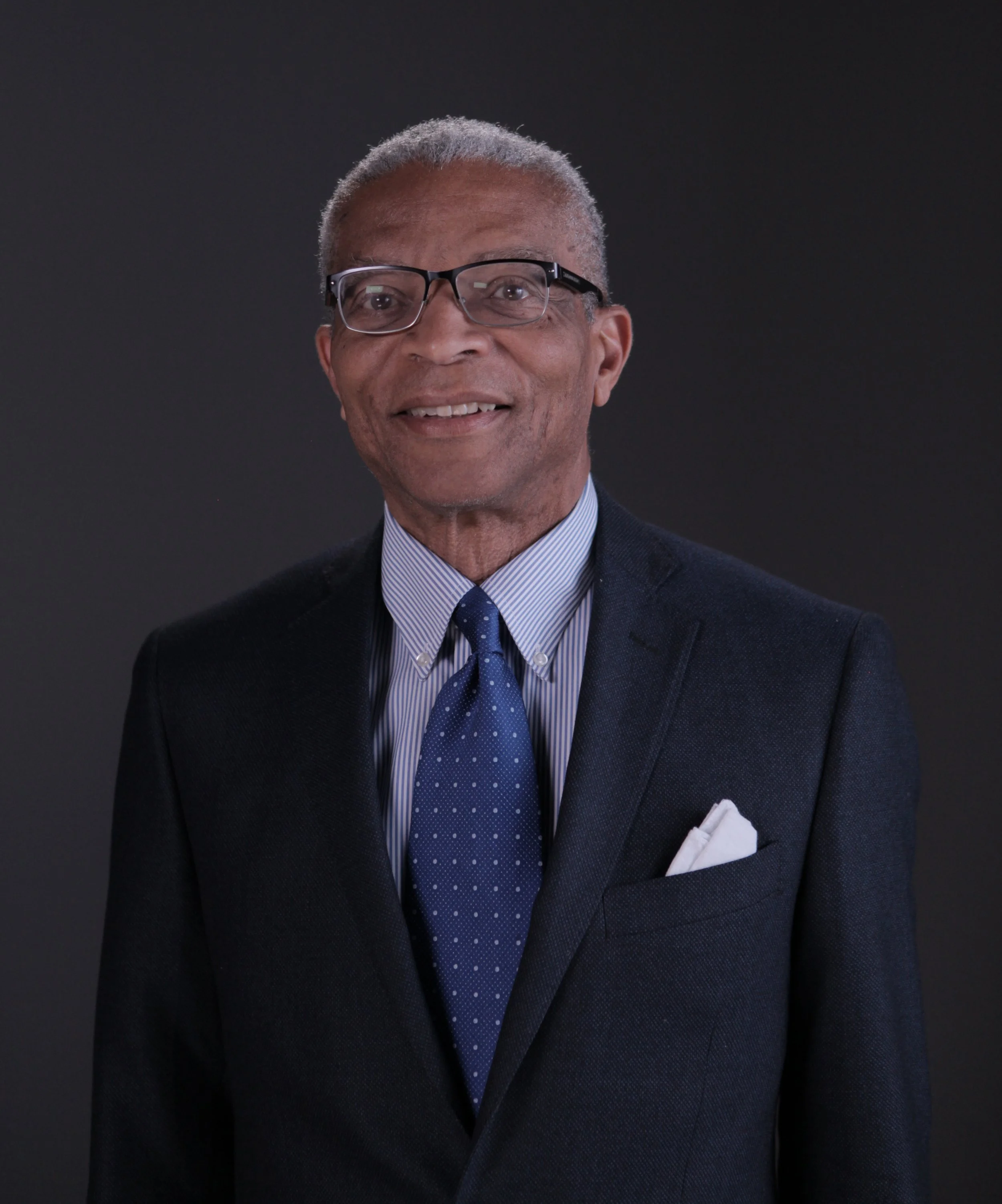
Harry Hutchison
Senior Legal & Policy Columnist
Harry G. Hutchison has served as a Professor of Law at the Antonin Scalia Law School, George Mason University, a Visiting Fellow at Harris Manchester College, the University of Oxford, a Founding Fellow at the Oxford Centre for the Study of Law & Public Policy, and as a Professor of Law at Wayne State University School of Law. Additionally, he has practiced in the realms of public policy, constitutional law, labor law, and antitrust. His research interests encompass religious liberty, international affairs, corporate governance, labor and employment law, and the application of economic principles to diverse topics. He has produced more than sixty law review articles, review essays, public policy studies, and Civil Rights opinions. He specializes in applying economic, philosophical, theological, and historical principles to a wide variety of topics. He has published law review articles in the Harvard Journal of Legislation, the Journal of Corporation Law, Emory International Law Review, the University of Michigan Journal of Law Reform, the Stanford Journal of Civil Rights and Civil Liberties, the New York University Journal of Law & Liberty, and the Harvard Journal of Law & Public Policy. He has also served as the principal editor of Burning Bridges: Turkey’s Return to Islamic Authoritarianism, and he has written Requiem for Reality: Critical Race Theocrats and Social Justice Dystopia, which examines the social justice movement. He has also written the Foreword for the New York Times bestseller, The Rise of ISIS: A Threat We Can’t Ignore. He has written commentary for The Detroit News, The New York Times, The Christian Post, and The American Thinker, as well as hundreds of blog posts, and has delivered speeches throughout the United States. He holds degrees in economics, law, and business from Wayne State University and the University of Michigan. He also holds a Diploma in Theology from the University of Oxford.
Recent Articles

In future cases, the pertinent questions are whether the decisions by the American Medical Association and the American Plastics Surgeons to reverse their medical advice for minors and whether the work of psychologist Brooke Laufer should (1) inform and affect decisions by school boards to offer support plans for minors and socially transition students without parental input, and (2) whether school board decisions can pass muster with citizens, courts, and children in the long run.
Both the First Baptist Church in Bentonville, Arkansas, and Bethel Church, Redding, California, face justifiable scrutiny. First Baptist Church faces a lawsuit involving claims of “willful and wanton negligence.” The suit involves multiple defendants. The case was prompted by the misbehavior of Keenan Hord, a former youth minister, who pleaded guilty to 13 counts of sexual assault.
Against this backdrop, Bethel Church now faces credible allegations that it platformed two individuals over a span of years—Shawn Bolz and Bob Hartley—who, according to witnesses, engaged in a pattern of prophetic manipulation and sexual abuse.
The contested debate regarding the reality and recognition of the biological differences between men and women has now reached the United States Supreme Court. After a firestorm of social media controversy, on January 13, 2026, the Court heard oral arguments in two cases: West Virginia v. B. P. J. and Little v. Hecox. These cases are framed by recently passed statutes in Idaho and West Virginia that reserve girls’ sports for females.
On January 18, 2026, Don Lemon, Nekina Levy Armstrong, and a group of raucous protestors interrupted services at the Cities Church in Minneapolis. Ms. Armstrong and two other protestors have already been arrested for their participation in the protest, while a Magistrate judge has rejected charges against Mr. Lemon. Still, the question remains whether Don Lemon, an alleged journalist, should face criminal charges as well.
Humankind’s pursuit of perfection on the road to paradise has always turned dark. Often this progressive pursuit has relied on questionable science that leads inevitably toward eugenics and planned breeding that culminates “in the lethal tenets of the Nazi regime.” This quest for perfection continues to reverberate throughout the West today.
Now, Canada is poised to follow Nazi Germany’s disturbing example by killing itself on a road marked with eugenics and alleged human progress. As highlighted in an Atlantic magazine article this past September, the Quebec College of Physicians has raised the idea of extending Canada’s Medical Assistance in Dying (MAID) program to cover infants under one year old in cases of “severe deformities.”
As we know, once the barrier of killing the innocents is breached, there is no upper limit on the willingness of experts to end suffering, advance efficiency, and embrace despotism.
The United States Supreme Court has clearly and unmistakably established parents’ right to freely exercise their religion, including the right to “direct the religious upbringing of their children.” Nonetheless, a Maine district court has issued a custody order prohibiting a mother from taking her daughter to church. In December 2024, the court prohibited Emily Bickford, the parent with primary custody, from bringing her daughter, Ava, to Calvary Chapel in Westbrook, Maine.
Apparently, those who do not know history are doomed to repeat it, and those who understand history are doomed to watch others repeat it. Mistake after mistake, humans lumber on as they fall prey to forgetfulness that reflects the absence of direct contact with previous generations.
The political, social, and cultural battles ahead are likely to become increasingly challenging. Christian churches, schools, and academic institutions that refuse to face this gathering storm will reap a political, social, and legal whirlwind. If Christian institutions wish to remain Christian, being nice is not enough.
The rights of Christians are under a continuing threat from the spirit of the age. This threat implicates the rights of individuals, parents, churches, and Christian schools.
This threat prompts a question: are parents, churches, counselors, and religious institutions, including schools, prepared to fight back and defend their institutions?
As a consequence of the instability of the nation of Nigeria and the world’s indifference, Nigeria has become one of the most dangerous places in the world to be a Christian. This situation exists because Islamic militants are attempting to wipe out the Christian population in Africa’s most populous country.
Dr. Oz’s medical beliefs may be influenced by Gnosticism, mysticism, and perhaps even the occult. Christians should be aware and vigilant.
All Christians have been called to unify, to seek justice, and join in a spiritual battle, knowing that Charlie Kirk’s courageous witness and his assassination combine to call us into a struggle that demands every breath we take. That is the beginning and the end of all of our exploration.
For more than 150 years, the Little Sisters of the Poor have faithfully served the poor, motivated by a religious calling to surrender all for the sake of others. The nuns have been engaged in a long-running legal battle over the federal government’s contraception mandates. After several court victories, this battle has now taken an ominous turn since a federal court has ruled against an exemption that permitted the religious order’s opposition to the mandate to take shape.
Any encounter with ICE within the context of immigration and border enforcement exposes churches and, more particularly, church personnel to the risk that they will be charged with a crime if they continue to provide sanctuary to illegal aliens, particularly aliens who ICE seeks. For churches that intend to continue such a policy, the Trump Administration’s decision to rescind the Biden Administration's rules raises a flood of questions that place such behavior in harm’s way.
For decades, there has been a fierce debate about the constitutionality and general legality of the Johnson Amendment. This little-known amendment has been used to restrict the First Amendment rights of churches and faith-based organizations for more than 60 years. But the mission of the church demands that it be encouraged to speak truthfully to America’s postmodern generation. How should the church respond?